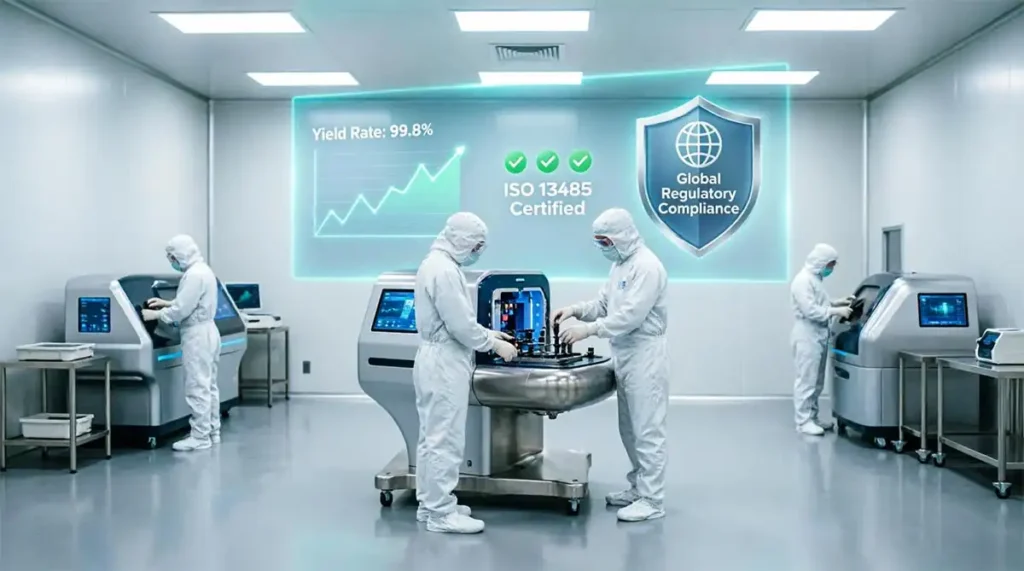
The medical device industry continues to evolve rapidly, driven by innovation, stricter regulations, and increasing customer expectations. In this environment, ISO 13485 Certification has become the internationally recognized benchmark for establishing an effective Quality Management System (QMS) specifically designed for medical device organizations.
Whether you manufacture surgical instruments, diagnostic equipment, medical software, implants, or distribute healthcare products, achieving ISO 13485 Certification demonstrates your commitment to quality, regulatory compliance, patient safety, and continual improvement.
This comprehensive guide explains everything businesses need to know about ISO 13485 Certification in 2026—from its requirements and benefits to implementation strategies and future trends.
What is ISO 13485?
ISO 13485 is an internationally recognized Quality Management System (QMS) standard developed specifically for organizations involved in the lifecycle of medical devices.
Unlike general quality standards, ISO 13485 focuses on:
- Medical device safety
- Regulatory compliance
- Product traceability
- Risk management
- Process validation
- Sterility assurance
- Customer satisfaction
The standard applies to organizations involved in:
- Medical device manufacturing
- Component manufacturing
- Medical software development
- Packaging
- Sterilization services
- Distribution
- Installation
- Maintenance
It provides a structured framework that ensures products consistently meet customer expectations and regulatory requirements.
History and Evolution
ISO first published ISO 13485 in 1996 as an adaptation of ISO 9001 specifically for medical devices.
Major revisions include:
- 2003 Edition
- 2016 Edition (currently applicable worldwide)
The ISO 13485:2016 version remains the globally accepted standard in 2026, with continued emphasis on:
- Risk-based thinking
- Regulatory alignment
- Supplier controls
- Documentation
- Validation
- Post-market surveillance
Why ISO 13485 Certification Matters
Medical devices directly impact human health. Any manufacturing error could result in serious consequences.
ISO 13485 Certification helps organizations establish systems that reduce risks while improving operational consistency.
Major reasons organizations pursue certification include:
1. Regulatory Compliance
Many regulatory authorities recognize ISO 13485 as an important framework for demonstrating compliance.
Examples include:
- European Union MDR
- UK MDR
- Health Canada
- Australia’s TGA
- Japan PMDA
- Various Middle Eastern authorities
Although certification alone does not guarantee regulatory approval, it significantly supports market access.
2. Global Recognition
ISO 13485 Certification is accepted worldwide.
Many hospitals, procurement agencies, distributors, and multinational manufacturers require suppliers to maintain certification before entering business relationships.
3. Customer Confidence
Healthcare providers demand reliable products.
Certification demonstrates that your organization:
- Follows internationally accepted practices
- Controls manufacturing processes
- Maintains traceability
- Continuously improves quality
This builds trust with customers and regulators alike.
Key Requirements of ISO 13485 Certification
The standard outlines comprehensive requirements covering every stage of product realization.
Quality Management System
Organizations must establish documented procedures covering:
- Quality objectives
- Process controls
- Corrective actions
- Preventive actions
- Internal audits
- Document control
- Record management
The QMS should be maintained continuously rather than only during audits.
Risk Management
Risk management is integrated throughout the product lifecycle.
Organizations identify:
- Hazards
- Potential failures
- Risk controls
- Residual risks
This proactive approach improves patient safety while minimizing product failures.
Design and Development Controls
Organizations designing medical devices must implement formal controls for:
- Design planning
- Design inputs
- Design outputs
- Verification
- Validation
- Design review
- Design transfer
These controls ensure products consistently meet intended use requirements.
Supplier Management
Supplier quality directly affects medical device safety.
ISO 13485 requires organizations to:
- Evaluate suppliers
- Monitor supplier performance
- Maintain approved supplier lists
- Verify purchased materials
Effective supplier management reduces production risks.
Documentation Requirements
Documentation forms the foundation of ISO 13485 Certification.
Typical documents include:
- Quality Manual
- Standard Operating Procedures
- Work Instructions
- Validation Reports
- Calibration Records
- Training Records
- Complaint Files
- Risk Files
- Audit Reports
Accurate documentation provides objective evidence of compliance.
Benefits of ISO 13485 Certification
Organizations enjoy numerous operational and strategic advantages.
Improved Product Quality
Consistent processes reduce variation, defects, and recalls.
Better Risk Management
Structured risk assessments help identify issues before products reach patients.
Increased Market Access
Many international buyers require ISO 13485 Certification from suppliers.
Stronger Regulatory Readiness
Certification simplifies preparation for regulatory inspections.
Higher Customer Satisfaction
Reliable products improve reputation and strengthen long-term customer relationships.
Operational Efficiency
Documented procedures reduce waste, improve productivity, and streamline workflows.
Competitive Advantage
Certified organizations often stand out during tenders and procurement evaluations.
Who Needs ISO 13485 Certification?
Although not mandatory everywhere, certification is highly recommended for organizations involved in:
- Medical device manufacturers
- Contract manufacturers
- Medical software companies
- Sterilization providers
- Packaging companies
- Testing laboratories
- Calibration providers
- Component suppliers
- Importers
- Exporters
- Distributors
Even startups pursuing global markets benefit significantly from early implementation.
Step-by-Step ISO 13485 Certification Process
Achieving certification typically follows six structured stages.
1. Gap Analysis
Organizations compare existing processes against ISO 13485 requirements.
This identifies:
- Missing procedures
- Documentation gaps
- Training needs
- Compliance risks
2. Documentation Development
The organization develops:
- Policies
- Procedures
- Process maps
- Risk files
- Quality objectives
- Forms and records
Clear documentation ensures consistency across departments.
3. System Implementation
Employees begin following documented procedures.
Management provides:
- Training
- Resources
- Performance monitoring
- Process measurements
Implementation generally lasts several months.
4. Internal Audit
Internal auditors evaluate whether processes conform to ISO requirements.
Audit findings may include:
- Nonconformities
- Opportunities for improvement
- Best practices
Corrective actions are implemented before certification.
5. Management Review
Top management reviews:
- Audit results
- Customer feedback
- Quality objectives
- Process performance
- Improvement opportunities
Leadership involvement is a key ISO requirement.
6. Certification Audit
An accredited certification body conducts:
Stage 1 Audit
Documentation review.
Stage 2 Audit
On-site assessment of implementation.
If successful, the organization receives ISO 13485 Certification, typically valid for three years with annual surveillance audits.
Common Challenges and How to Overcome Them
Many organizations encounter obstacles during implementation.
Documentation Overload
Solution:
Develop practical documentation instead of unnecessary paperwork.
Employee Resistance
Solution:
Provide continuous awareness training and involve staff early.
Supplier Compliance
Solution:
Implement supplier qualification programs and regular evaluations.
Resource Constraints
Solution:
Prioritize high-risk processes and implement improvements in phases.
Maintaining Compliance
Solution:
Conduct routine internal audits and management reviews throughout the year.
ISO 13485 Certification Cost in 2026
Certification costs vary depending on:
- Company size
- Number of employees
- Product complexity
- Number of locations
- Existing quality systems
- Certification body
- Consultancy support
Typical cost categories include:
| Cost Element | Description |
| Gap Assessment | Initial evaluation |
| Documentation | Procedure development |
| Training | Employee education |
| Internal Audits | Compliance verification |
| Certification Audit | Stage 1 and Stage 2 |
| Surveillance Audits | Annual maintenance |
| Recertification | Every three years |
Although certification requires investment, many organizations recover costs through improved efficiency and reduced quality issues.
ISO 13485 vs ISO 9001
Although both standards focus on quality management, they serve different purposes.
| ISO 13485 | ISO 9001 |
| Medical device industry | All industries |
| Regulatory focus | Customer satisfaction focus |
| Risk management | Process improvement |
| Product traceability | General quality management |
| Extensive documentation | More flexible documentation |
| Validation requirements | Limited validation |
Many medical device companies maintain both certifications to maximize operational effectiveness.
Maintaining Your ISO 13485 Certification
Certification is not a one-time achievement.
Organizations must continuously:
- Conduct internal audits
- Review management performance
- Monitor quality objectives
- Investigate complaints
- Implement corrective actions
- Train employees
- Update documentation
- Improve processes
Annual surveillance audits verify ongoing compliance.
Latest Trends in ISO 13485 for 2026
The medical device industry continues evolving rapidly.
Major trends include:
Digital Quality Management Systems
Cloud-based QMS software simplifies document control and audit management.
AI-Assisted Risk Analysis
Artificial intelligence supports predictive quality management and early defect detection.
Cybersecurity Integration
Medical software manufacturers increasingly integrate cybersecurity controls into quality systems.
Sustainability
Organizations are incorporating environmentally responsible manufacturing alongside quality objectives.
Stronger Supplier Oversight
Global supply chain disruptions have increased emphasis on supplier qualification and monitoring.
Frequently Asked Questions
1. What is ISO 13485 Certification?
It is an internationally recognized certification demonstrating that a medical device organization operates an effective Quality Management System.
2. Is ISO 13485 mandatory?
Not universally. However, many regulators, customers, and procurement organizations expect or require it.
3. How long does certification take?
Most organizations complete implementation within 4–12 months, depending on size and readiness.
4. How long is the certificate valid?
Typically three years, with annual surveillance audits.
5. Can small businesses obtain ISO 13485 Certification?
Yes. The standard applies to organizations of all sizes, including startups and SMEs.
6. Does ISO 13485 replace regulatory approval?
No. Certification supports compliance but does not replace country-specific regulatory requirements.