
ISO Certification in Dubai: Process, Cost and Local Support
Bidding for a DEWA contract, a Dubai Municipality project or a free zone deal? Each one starts with a supplier check, and ISO is often first on the list. ISO certification in Dubai proves that your systems for quality, safety, environment or data have passed an independent audit.
Kingsmen Certification Services (KCS) has guided UAE companies through ISO since 2014.
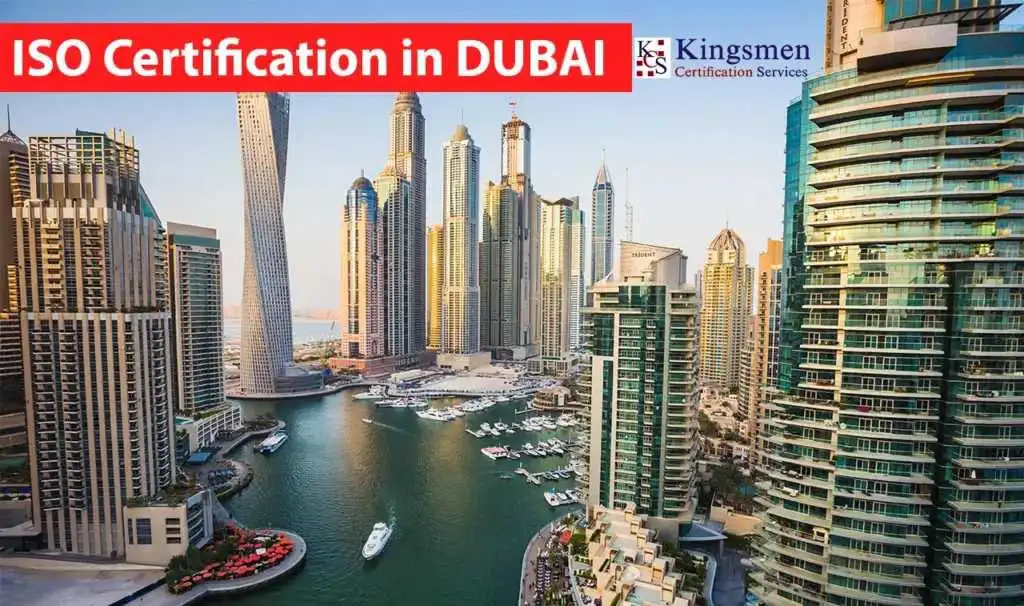
How to Get ISO Certification in Dubai
Start by matching the standard to what your Dubai client or tender asks for. Next, we check your current practices against that standard and close the gaps. Your team then learns the new system and tests it in an internal audit. Last, an accredited certification body audits you and issues the certificate, often within 6 to 12 weeks.
Our job is the consultant’s job. We build the system with your team and get you ready for the audit. An independent, accredited body then runs the audit itself. Keeping these two roles apart is exactly what makes your certificate credible to Dubai buyers.
Why Companies Need ISO Certification in Dubai
Dubai buyers check suppliers closely. Government entities, utilities, developers and main contractors all want proof of quality, safety and control before they sign. An ISO certificate gives that proof in one document. So it often decides whether your bid reaches the shortlist or stays in the pile.
The demand comes from every part of the city. Contractors on Dubai Municipality and RTA projects face site safety checks. Traders in DMCC, JAFZA and Dubai South face supplier audits from global buyers. Meanwhile, IT and service firms in the free zones face data security reviews. That is why ISO certification in Dubai has become a basic entry ticket for serious work. The same demand runs across the country, as our guide to ISO certification in UAE shows.
ISO for Dubai Free Zone Companies
Free zone companies in DMCC, JAFZA, Dubai South and DAFZA often trade with global buyers and large regional groups. Those buyers send long supplier questionnaires, and one ISO certificate answers many of them. The free zones do not require ISO by law.
However, many free zone firms treat it as a must because their biggest clients ask for it. Some also need it to renew a framework deal or join a new supplier list. For these firms, ISO certification in Dubai protects revenue they already have. Firms in Sharjah free zones face similar checks, as our page on ISO certification in Sharjah explains.
Benefits of ISO Certification for Dubai Businesses
For Dubai firms, the biggest gain is access. Certified suppliers pass vendor registration faster and qualify for more bids. Inside the business, clear procedures mean fewer site errors, fewer client complaints and smoother handovers between projects. Together, these gains shorten the time from first enquiry to signed contract.
- More tenders: the certificate answers key questions in government and corporate supplier forms.
- Fewer errors: clear processes cut rework, complaints and delays.
- Stronger trust: clients and banks see an independent check of your systems.
- Safer sites: ISO 45001 controls reduce injuries and site stoppages.
- Wider markets: one recognised certificate opens doors across the GCC and beyond.
Many Dubai clients notice the change within one project cycle. Proposals go out faster, because the answers are already on file. For many firms, ISO certification in Dubai pays for itself through one or two new contracts.
-
Enhanced Credibility and Reputation
Certification demonstrates commitment to quality and customer satisfaction, enhancing trust among stakeholders. -
Improved Operational Efficiency
ISO standards promote streamlined processes, reducing waste and improving overall efficiency. -
Access to New Markets
ISO certification can facilitate market expansion by meeting international procurement requirements. -
Legal and Regulatory Compliance
Helps organizations comply with relevant laws and regulations. -
Customer Satisfaction
Focus on quality and continuous improvement leads to higher customer satisfaction.
Popular ISO Standards in Dubai
In Dubai, the standard usually follows the client. Government buyers and developers ask for ISO 9001. Main contractors add ISO 45001 and ISO 14001 for site work. Meanwhile, banks and government IT buyers look for ISO 27001, while hotels and caterers need ISO 22000. The table shows who asks for what. Contractors with site work often add ISO 14001 certification for environmental control.
| Standard | What it covers | Who asks for it in Dubai |
| ISO 9001 | Quality management | Government buyers, developers, traders, service firms |
| ISO 14001 | Environmental management | Contractors, factories, waste and logistics firms |
| ISO 45001 | Occupational health and safety | Main contractors, MEP firms, facilities management |
| ISO 27001 | Information security | Banks, government entities, free zone IT clients |
| ISO 22000 | Food safety | Hotels, caterers, food traders and manufacturers |
IT suppliers to Dubai government entities face one more check. Dubai Electronic Security Center (DESC) sets the Information Security Regulation for those entities and their suppliers. So many IT firms pair ISO 27001 certification with their DESC work. Together, they make ISO certification in Dubai far easier to defend in a vendor review.
Not sure which standard fits? Start with the one your biggest clients ask for. Each standard has its own detailed guide. For example, see how ISO 9001 certification works for UAE companies, from documents to the final audit.
ISO Certification Process in Dubai, with Timelines
Here is how a typical Dubai project runs, week by week. A focused SME project needs about 6 to 12 weeks of preparation before the audit. Multi-site contractors and larger groups need more time. After the two-stage audit, your ISO certification in Dubai stays valid for three years, with yearly surveillance audits.
Week 1 – Gap check: we walk through your office or site and list what the standard still needs.
Week 2 – Project plan: we agree the scope, the owners and a target audit date.
Weeks 3 to 6 – Your system: we write short procedures, forms and records that fit your team.
Weeks 6 to 8 – Team training: staff learn their part and start using the new records.
Week 9 – Internal audit: we test the system, close any gaps and hold the management review.
Stage 1 audit: the certification body checks your documents and confirms you are ready.
Stage 2 audit: the body visits your site, samples your records and issues the certificate.
Auditors usually ask for your policy, objectives, procedures, risk register and training records. They also check your internal audit report and management review minutes. So start collecting these early. Clean records make ISO certification in Dubai faster and calmer.
Facing a tender deadline? Ask about our 2-day priority service. It speeds up the preparation, but the accredited audit still takes place. So the certificate holds up in any client check.
Choosing Between ISO Certification Companies in Dubai
builds your system and prepares you for the audit. A certification body runs the audit and issues the certificate. The two must stay separate. So always check who does what before you sign, and ask for the full cost upfront.
- Accreditation: confirm which accreditation body approved the certification body, and for which standards.
- Verification: ask how your clients can look up the certificate, for example on IAF CertSearch.
- Real audits: walk away from any offer that issues a certificate without visiting your site.
- Clear pricing: ask for consultancy, audit and yearly surveillance fees in writing.
Kingsmen works only with accredited certification bodies. So when you hold ISO certification in Dubai through us, your clients can check it with confidence.
ISO Certification Cost in Dubai
Prices in Dubai depend on four things: the standard, headcount, number of sites and your current readiness. A budget normally covers our consultancy fee and the certification body’s audit fee. After that, a shorter surveillance audit each year adds a smaller fee. A five-person trading office pays far less than a contractor with three active sites.
Planning more than one standard? Building ISO 9001, 14001 and 45001 as one integrated system usually costs less than three projects. Our guide to ISO certification cost in UAE breaks the numbers down further. For an exact figure, ask Kingsmen for a fixed, itemised quote.
Integrated Management System (IMS) Certification in Dubai
An integrated management system combines ISO 9001, ISO 14001 and ISO 45001. You run one set of policies, audits and reviews. Dubai contractors choose it because main contractors often ask for all three. One system means one internal audit plan and fewer audit days. Learn more about our integrated management system service.
Industries We Serve in Dubai
Dubai’s economy runs on construction, trade, hospitality and services. Each sector needs a system that fits its real risks and clients. Here are the sectors that ask for ISO certification in Dubai most often, and the standards they usually choose.
- Construction and MEP: ISO 9001, ISO 14001 and ISO 45001 for main contractor and authority prequalification. See ISO 45001 certification for site safety.
- Trading and logistics: ISO 9001 for supplier registration in DMCC, JAFZA and with GCC buyers.
- Hospitality and food: ISO 22000 and HACCP for hotels, restaurants and caterers.
- IT and cloud service firms: ISO 27001 for client data, DESC-linked vendor reviews and bank audits.
- Facilities management: ISO 41001, ISO 9001 and ISO 45001 for building owners and developers.
Why Choose Kingsmen as Your ISO Consultants in Dubai?
Kingsmen has helped UAE companies build ISO systems since July 2014. We started with three consultants and now have more than 20. As ISO consultants in Dubai, we run the gap analysis, write the documents and train your team. Every audit goes through an accredited certification body, so clients can verify your certificate. We also support nearby firms, including ISO certification in Ajman.
Every project includes a gap analysis report, ready-to-use documents, staff training, an internal audit and full audit support. So your ISO certification in Dubai comes with everything your team needs to run the system after the audit.
- Practical systems: procedures your staff can follow on a busy site or office floor.
- Tender focus: we plan your project around your bid dates.
- Year-round help: support continues after certification, through each surveillance visit.
- GCC coverage: the same team supports projects in Oman, Saudi Arabia, Qatar and Bahrain.
Most Dubai projects start with a deadline. So we work back from your bid or audit date and set weekly milestones. That keeps your team on track and avoids a last-minute rush.
ISO Certification Renewal in Dubai
Your certificate stays valid for three years, with a surveillance audit each year. Our consultants prepare you for each visit and the renewal audit, so you keep your certificate without gaps.
ISO FAQs for Dubai Businesses
How do I get ISO certification in Dubai?
Pick the standard your client or tender names. Then close the gaps against it, train your team and test the system in an internal audit. After that, an accredited certification body audits you in two stages and issues the certificate. A consultant keeps each step on schedule, so you pass the first time.
How long does ISO certification take in Dubai?
A focused SME project in Dubai needs about 6 to 12 weeks of preparation. The two audit stages follow. Larger or multi-site companies need more time. If a tender deadline is close, ask about our 2-day priority service. It still includes a full accredited audit.
How much does ISO certification cost in Dubai?
The cost depends on the standard, your headcount, your sites and your readiness. Most budgets include a consultancy fee and a certification body audit fee, plus smaller yearly surveillance costs. A combined ISO 9001, 14001 and 45001 project costs less than three separate ones. A fixed, itemised quote gives the clearest answer.
Is ISO certification required for Dubai government tenders?
Many Dubai government tenders and supplier registrations ask for ISO 9001 or score it in the evaluation. Utilities and main contractors often add ISO 14001 and ISO 45001. The exact rule depends on the entity and the category. So always check the tender documents before you plan your ISO certification in Dubai.
Do free zone companies in Dubai need ISO certification?
No free zone authority requires it by law. Still, many DMCC, JAFZA and Dubai South firms choose certification because their buyers insist on it. For exporters and GCC suppliers, one certificate settles many questionnaire items at once. In practice, it is a commercial requirement rather than a legal one.
How do I choose between ISO certification companies in Dubai?
Start by asking whether the firm consults or certifies, because one company should not do both for you. Next, check the certification body’s accreditation and how clients can verify the certificate. Then compare written quotes that include surveillance fees. Treat any offer without a real audit as a red flag.
Request a Consultation in Dubai
Ready to start your ISO certification in Dubai? Book a short consultation with our team. We look at your standard, your scope and your deadline. Then we send a clear plan with steps, timeline and cost. From there, your team knows exactly what to do next, and Kingsmen supports every step.