Standards, Benefits, Requirements and Complete Certification Guide
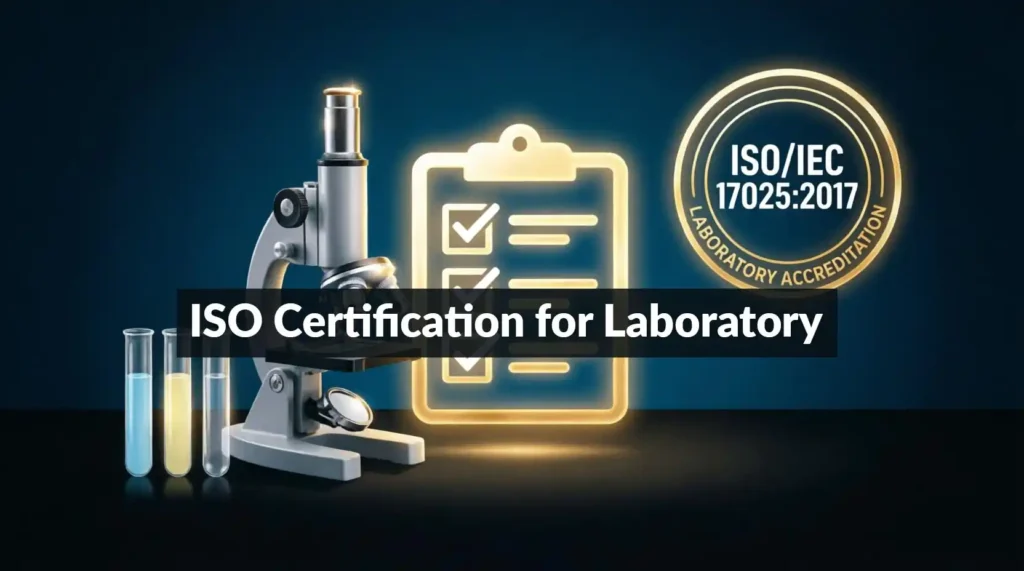
Laboratories play a vital role in maintaining quality, safety, and accuracy across industries. Whether performing diagnostics, calibration, environmental, pharmaceutical, or industrial testing, laboratories must consistently deliver reliable and valid results. This is where ISO certification for laboratory becomes essential, as it ensures consistent global compliance, strengthens operational control, and enhances the credibility of laboratory outcomes across international standards.
International ISO standards provide laboratories with structured management systems that improve operational consistency, technical competence, customer confidence, and continual improvement. Implementing the right ISO standard also demonstrates your laboratory’s commitment to internationally accepted best practices.
This guide explains laboratory ISO standards, certification requirements, benefits, implementation steps, and how to choose the most suitable management system for your laboratory.
Organizations planning ISO certification should first understand which standard aligns with their laboratory activities.
What Is ISO Certification for Laboratory?
ISO certification for laboratory confirms that a laboratory has implemented an internationally recognized management system according to applicable ISO requirements.
Certification evaluates management processes, documented procedures, personnel competence, equipment management, risk controls, continual improvement, and operational consistency.
An effective laboratory management system helps improve:
- Testing accuracy
- Operational consistency
- Equipment management
- Staff competence
- Customer confidence
- Documentation control
- Risk management
- Regulatory compliance
- Internal auditing
- Continual improvement
Rather than evaluating a single test, certification assesses whether the laboratory consistently produces reliable results through controlled management processes.
What Is the ISO Standard for Laboratories?
Different laboratories require different ISO standards depending on their services, industry, and regulatory obligations.
The table below summarizes the most widely used laboratory standards.
| ISO Standard | Purpose | Suitable For | Why It Is Important |
| ISO 17025 | Competence of testing and calibration laboratories | Testing and calibration laboratories | Demonstrates technical competence and reliable testing results. |
| ISO 15189 | Quality and competence of medical laboratories | Medical and clinical laboratories | Supports accurate patient testing and healthcare quality. |
| ISO 17020 | Requirements for inspection bodies | Inspection organizations | Standardizes inspection activities and reporting processes. |
| ISO 17034 | Competence of reference material producers | Reference material producers | Ensures reliable production of certified reference materials. |
| ISO 17043 | Proficiency testing providers | PT scheme providers | Improves inter-laboratory comparison and proficiency testing. |
| ISO 9001 certification | Quality Management System | All laboratory types | Improves quality management and operational consistency. |
| ISO 45001 certification | Occupational Health & Safety | Laboratories handling hazardous materials | Protects employees and reduces workplace risks. |
| ISO 14001 certification | Environmental Management | Environmental and industrial laboratories | Improves environmental performance and compliance. |
| ISO 27001 Certification | Information Security Management | Laboratories managing confidential information | Protects laboratory data and customer information. |
Laboratories should choose certification based on their operational activities rather than selecting standards simply because they are popular.
To understand additional standards, explore our complete ISO certification standards guide.
ISO 17025: The Primary Standard for Testing and Calibration Laboratories
When organizations search for ISO certification laboratory, ISO/IEC 17025 is usually the primary standard they require.
ISO/IEC 17025 specifies requirements for the competence of testing and calibration laboratories. Unlike general quality standards, it evaluates both technical competence and management system effectiveness.
The standard covers areas including:
- Measurement traceability
- Equipment calibration
- Method validation
- Technical competence
- Risk management
- Internal audits
- Corrective actions
- Quality assurance
- Laboratory documentation
- Management review
Implementing ISO/IEC 17025 helps laboratories produce technically valid, repeatable, and internationally accepted testing results.
What Is ISO 17025 in Laboratory?
ISO/IEC 17025 is the international standard establishing competence requirements for testing and calibration laboratories.
It evaluates whether laboratories possess qualified personnel, validated methods, controlled equipment, and effective management systems capable of producing reliable results.
Laboratories performing industrial testing or calibration generally consider ISO/IEC 17025 their primary certification objective.
What Is the Difference Between ISO 15189 and ISO 17025?
Although both standards evaluate laboratory competence, they serve different industries.
| Feature | ISO 15189 | ISO 17025 |
| Primary Industry | Medical laboratories | Testing & calibration laboratories |
| Patient Focus | Yes | No |
| Technical Competence | Yes | Yes |
| Quality Management | Yes | Yes |
| Typical Users | Hospitals & diagnostic centres | Industrial, research & calibration laboratories |
Medical laboratories usually implement ISO 15189, while testing laboratories generally implement ISO/IEC 17025.
Benefits of ISO Certification for Laboratory
Implementing an effective laboratory management system delivers measurable operational improvements.
Major benefits include:
- Improved testing reliability
- Better customer confidence
- Higher operational consistency
- Stronger documentation control
- Increased technical competence
- Better regulatory compliance
- Reduced operational risks
- Improved audit readiness
- Better continual improvement
- Enhanced organizational reputation
These benefits support laboratories operating within highly regulated industries requiring consistent technical performance.
ISO Lab Certification Requirements
Organizations frequently search for ISO lab certification requirements before beginning implementation.
Although requirements differ between standards, laboratories commonly require:
| Requirement | Purpose |
| Quality Policy | Defines management commitment |
| Document Control | Maintains controlled documentation |
| Competence Records | Demonstrates employee qualifications |
| Equipment Management | Ensures accurate measurements |
| Risk Assessment | Identifies operational risks |
| Internal Audits | Evaluates management effectiveness |
| Corrective Actions | Resolves identified issues |
| Management Reviews | Reviews overall system performance |
| Record Management | Maintains objective evidence |
| Continual Improvement | Supports ongoing system development |
Organizations should review complete ISO Certification Requirements before beginning implementation.
How to Obtain ISO Certification for Laboratory
Most laboratories follow a structured implementation process.
Step 1: Select the Appropriate Standard
Choose the ISO standard matching your laboratory’s operational activities and customer requirements.
Step 2: Conduct a Gap Analysis
Compare existing laboratory processes with applicable ISO requirements to identify improvement opportunities.
Step 3: Develop Documentation
Prepare policies, procedures, records, and operational controls supporting laboratory activities.
Step 4: Implement the Management System
Train employees and ensure documented procedures are consistently followed throughout laboratory operations.
Step 5: Conduct Internal Audits
Internal audits verify whether laboratory processes conform to management system requirements.
Step 6: Complete Management Review
Leadership evaluates performance indicators, risks, audit findings, and continual improvement opportunities.
Step 7: Certification Audit
An independent certification body evaluates conformity against the selected ISO standard before issuing certification.
Ready to Certify Your Laboratory?
KCS (Kingsmen Consultancy Services) helps laboratories implement internationally recognized ISO management systems through documentation, training, implementation, and certification support.
Contact KCS today for expert laboratory certification guidance.
Can Laboratories Implement Multiple ISO Standards?
Yes.
Many laboratories integrate several ISO management systems according to operational requirements.
Examples include:
- ISO/IEC 17025 + ISO 9001
- ISO/IEC 17025 + ISO 45001
- ISO/IEC 17025 + ISO 14001
- ISO/IEC 17025 + ISO 27001
Integrated management systems reduce duplicated documentation while improving organizational efficiency.
Can Laboratories Obtain ISO Certification Online?
Many organizations search for ISO certification for laboratories online when exploring implementation options.
Consultancy, documentation support, employee training, and gap analysis can often be delivered remotely. However, certification itself must always follow applicable certification and assessment requirements.
Organizations should avoid providers promising certificates without proper evaluation or implementation.
Which Laboratories Can Apply for ISO Certification?
The following laboratory types commonly implement ISO standards:
- Testing laboratories
- Calibration laboratories
- Medical laboratories
- Food laboratories
- Pharmaceutical laboratories
- Chemical laboratories
- Environmental laboratories
- Research laboratories
- Microbiology laboratories
- Veterinary laboratories
- Industrial laboratories
- Forensic laboratories
Each laboratory should select standards according to its operational scope and regulatory obligations.
Build a Stronger Laboratory with International ISO Standards
Reliable laboratory operations depend upon technical competence, controlled processes, and continual improvement.
Selecting the right ISO standard strengthens operational performance while improving customer confidence and regulatory compliance.
Whether implementing ISO/IEC 17025 or supporting management standards, a structured management system creates long-term organizational value.
KCS (Kingsmen Consultancy Services) helps laboratories implement internationally recognized ISO management systems tailored to their operational requirements.
Start Your Laboratory Certification Journey Today
Contact KCS – Kingsmen Consultancy Services to identify the right ISO standard, implement an effective management system, and achieve successful laboratory certification with confidence.
FAQs
Our laboratory already follows internal procedures. Do we still need ISO certification?
Existing procedures provide an excellent foundation for implementation. A structured gap assessment identifies missing requirements and improvement opportunities. Only necessary improvements should be implemented before certification begins.
Which ISO standard should our laboratory choose first?
The correct standard depends on your laboratory’s services and operational activities. Testing laboratories usually require ISO/IEC 17025, while medical laboratories select ISO 15189. Additional management standards support quality, safety, and information security objectives.
Will ISO certification interrupt our daily laboratory operations?
Implementation should support existing operations without unnecessary disruption. Activities are normally scheduled around routine laboratory responsibilities and workloads. A phased implementation approach minimizes operational interruptions during certification.
Is ISO certification expensive for small laboratories?
Certification costs depend on laboratory size, scope, and selected standards. Smaller laboratories generally require fewer implementation resources than larger organizations. A readiness assessment provides realistic cost and implementation expectations.
How long does laboratory certification usually take?
Implementation timelines depend upon existing documentation, readiness, and laboratory complexity. Prepared laboratories generally complete certification faster than new management system implementations. Gap assessments help establish practical certification schedules.
What happens if auditors identify nonconformities?
Audit findings are common during management system certification assessments. Corrective actions should address identified issues before certification decisions are finalized. Proper preparation significantly reduces audit findings and implementation delays.