
ISO/TC 299 is the ISO Technical Committee for robotics. It develops and maintains international standards in the robotics field. It is not a certification. It is the working body that produces documents such as ISO 10218-1, ISO 10218-2, and ISO/TS 15066.
These documents give robot manufacturers, system integrators, and engineering teams a common reference for robot safety and design.
This page explains what ISO/TC 299 is, what it covers, which standards it has produced, and how those standards apply to industrial and collaborative robot applications.
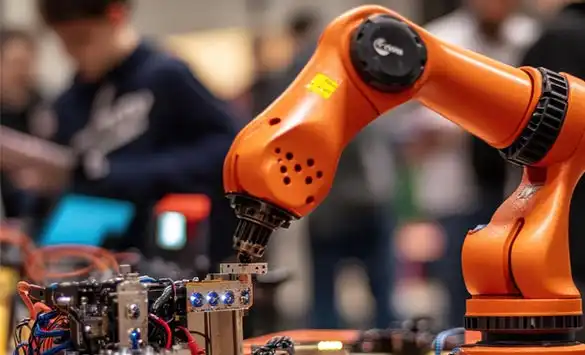
What Is ISO/TC 299?
ISO/TC 299 is the ISO Technical Committee for robotics. “TC” stands for Technical Committee. It is a working group within the International Organization for Standardization (ISO).
The committee brings together subject-matter experts from around the world. They draft, review, and update international standards within a defined scope. In this case, that scope is robotics.
ISO/TC 299 does not issue certificates. Organizations cannot become “ISO/TC 299 certified.” That is not what a Technical Committee does. Instead, the committee produces technical documents. These are the documents that manufacturers, integrators, and safety engineers use when designing and assessing robots and robotic systems.
ISO/TC 299 Formal Scope
The formal scope of ISO/TC 299 is:
Standardization in the field of robotics, excluding toys and military applications.
This means the committee’s work applies to:
- Industrial robots
- Collaborative robots (cobots)
- Service robots
- Mobile robots
- Robot systems and robot cells
- Human-robot interaction
The committee excludes toy robots and military robots from its scope.
What Does ISO/TC 299 Cover in Detail?
ISO/TC 299 works across many areas of robotics standardization. These include:
✨ Robot safety — requirements for industrial and service robots
✨ Collaborative robotics — safety in shared human-robot workspaces
✨ Robot vocabulary — common definitions and terms
✨ Robot performance — test methods and performance criteria
✨ Mobile robots — safety and communication for industrial mobile robots
✨ End-effectors — design guidance for robotic tooling
✨ Manual load/unload stations — guidance on operator interaction points
✨ Modularity — standards for modular service robot design
✨ Electrical interfaces — connectivity for robot end-effectors
✨ Energy consumption — measuring energy use in industrial robots
✨ Human-robot interaction — biomechanical data and safety considerations
Each of these areas may be covered by a separate standard, technical specification, or technical report. No single document covers all of them.
What Is the Role of ISO/TC 299?
ISO/TC 299 plays a key role in global robotics standardization. Here is what the committee does:
✨ Develops new international standards for robotics
✨ Revises existing standards as technology evolves
✨ Establishes common technical language across the industry
✨ Provides safety requirements for robot design and integration
✨ Supports consistent engineering practices across markets
✨ Coordinates with other ISO and IEC committees on related topics
The committee’s work helps robot manufacturers and users speak the same technical language. It supports safety, interoperability, and clarity in robot design and use.
ISO standards are not laws. They are internationally agreed technical documents. Legal requirements depend on the jurisdiction and regulations that apply to your organization.
Is ISO/TC 299 a Certification?
No. ISO/TC 299 is not a certification.
This is an important distinction. Many people confuse ISO Technical Committees with certifiable standards. They are different things.
Here is a clear explanation of each term.
ISO Technical Committee
An ISO Technical Committee — such as ISO/TC 299 — is a working group. It develops and maintains standards. It does not issue certificates. You cannot get certified to a Technical Committee.
ISO Standard
An ISO Standard — such as ISO 10218-1:2025 — is a published document. It sets out requirements that organizations can use as a reference. Accredited certification bodies can assess conformity to some ISO standards.
ISO Technical Specification
An ISO Technical Specification — such as ISO/TS 15066:2016 — is similar to a standard. But it is published at an earlier stage of consensus. It is used when a topic is still developing. Technical Specifications are not always certifiable documents.
ISO Technical Report
An ISO Technical Report — such as ISO/TR 20218-1:2018 or ISO/TR 20218-2:2017 — is an informative document. It provides guidance, data, or background information. Technical Reports do not set requirements. They are not used for certification.
Certification and Conformity Assessment
Certification is a separate process. An accredited third-party certification body assesses whether an organization’s product or system meets the requirements of a specific ISO standard. Certification applies to standards — not to Technical Committees, Technical Specifications, or Technical Reports.
In plain terms: ISO/TC 299 writes the documents. Certification bodies use those certifiable standards to assess conformity.
Key Standards and Documents Related to ISO/TC 299
ISO/TC 299 has produced a wide range of documents. Some are full standards. Others are technical specifications or technical reports. Each covers a different aspect of robotics.
ISO 10218-1:2025 – Industrial Robots
ISO 10218-1:2025 sets out safety requirements for industrial robots. It covers the robot itself — its mechanical design, control systems, and built-in safety features.
This is the current active edition of Part 1. It was published in 2025.
The 2011 edition — ISO 10218-1:2011 — has been withdrawn. It is no longer the reference document. Organizations designing or assessing industrial robots should use the 2025 edition.
ISO 10218-2:2025 – Industrial Robot Applications and Robot Cells
ISO 10218-2:2025 sets out safety requirements for industrial robot systems and robot cells. It focuses on integration — how the robot is installed, surrounded, and safeguarded within a complete system.
This is the current active edition of Part 2. It was published in 2025.
The 2011 edition — ISO 10218-2:2011 — has been withdrawn. It is no longer the reference document. Use ISO 10218-2:2025 for new safety assessments and robot cell design.
A Note on the Withdrawn 2011 Editions
Both ISO 10218-1:2011 and ISO 10218-2:2011 are officially withdrawn. Using them as the basis for new robot safety assessments is not recommended. The 2025 editions are the correct current references.
If your organization has documentation based on the 2011 editions, it is worth reviewing that documentation against the current 2025 requirements.
ISO/TS 15066:2016 – Collaborative Robots
ISO/TS 15066:2016 is a Technical Specification for collaborative robot safety. ISO wrote it to supplement the 2011 editions of ISO 10218-1 and ISO 10218-2.
It covers four collaborative methods:
- Power and force limiting
- Speed and separation monitoring
- Hand guiding
- Safety-rated monitored stop
Most of these requirements now sit inside ISO 10218-2:2025. ISO still lists ISO/TS 15066:2016 as published, and a new document, ISO 15066-1, is under development to replace it.
Note: ISO/TS 15066 is not a standalone certification document. Use it as supporting guidance alongside ISO 10218-2:2025.
ISO/TR 20218-1:2018 – End-Effectors
ISO/TR 20218-1:2018 is a Technical Report. It provides guidance on the safety design of end-effectors used with industrial robots. End-effectors are the tools or grippers attached to a robot arm.
As a Technical Report, this document is informative. It offers practical guidance — not certifiable requirements. It is useful for engineers designing or specifying robotic tooling.
ISO/TR 20218-2:2017 – Manual Load/Unload Stations
ISO/TR 20218-2:2017 is a Technical Report. It provides guidance on the safety design of manual load and unload stations within industrial robot systems. These are the points where human operators interact with the robot cell.
Like ISO/TR 20218-1, this document is informative. It supports practical safety design decisions. It is not intended for formal conformity assessment.
ISO/TC 299 and Industrial Robot Safety
Industrial robots can present serious hazards. These include:
✨ Moving robot arms and end-effectors
✨ High force and speed
✨ Automated tool changes
✨ Robot cell access during operation
✨ Integration with conveyors, fixtures, and other equipment
ISO/TC 299 standards — particularly the ISO 10218 series — address these hazards through safety requirements for robot design and system integration.
ISO 10218-1:2025 focuses on the robot manufacturer. It sets requirements for how a robot must be designed to be safe. ISO 10218-2:2025 focuses on the integrator. It sets requirements for how a robot system or cell must be built and safeguarded.
Together, these two standards provide a structured framework for reducing robot-related risks. They cover risk assessment, safeguarding methods, control system safety, and operator interface requirements.
Following these standards does not replace the need for a full risk assessment. Every robot application is different. Safe design requires careful evaluation of the specific robot, task, and environment.
ISO/TC 299 and Collaborative Robots
Collaborative robots — often called cobots — are designed to work alongside humans. They operate without the physical barriers common in traditional robot cells.
This creates specific safety challenges. Force limits, speed limits, and workspace design all matter. The safety assessment for a collaborative application is not simpler than for a traditional robot — it is different.
ISO 10218-2:2025 now holds most collaborative application requirements. These came from ISO/TS 15066:2016, which still offers supporting guidance on the four types of collaborative operation.
Using a cobot does not automatically make a robot application safe. Each collaborative application requires its own safety assessment. The physical interaction between robot and human must be evaluated carefully.
For collaborative robot applications, the key documents to reference are:
✨ ISO 10218-1:2025 — for the robot’s design and inherent safety
✨ ISO 10218-2:2025 — for system integration, safeguarding and collaborative requirements
✨ ISO/TS 15066:2016 — supporting guidance, now largely covered by ISO 10218-2:2025
ISO/TC 299 and ISO 10218 – What Is the Difference?
This is a common point of confusion. Here is the difference explained clearly.
ISO/TC 299 is the ISO Technical Committee. It is the working group of experts. It develops and maintains standards related to robotics. It is not itself a standard.
ISO 10218 is a specific standard series. It was developed by ISO/TC 299. It sets safety requirements for industrial robots and robot systems.
Think of it this way:
✨ ISO/TC 299 is the organization that writes and maintains the documents.
✨ ISO 10218 is one of the key documents that ISO/TC 299 has produced.
ISO/TC 299 also produced ISO/TS 15066, ISO/TR 20218-1, ISO/TR 20218-2, and many other documents. ISO 10218 is one part of a broader portfolio.
Who Uses ISO/TC 299-Related Robotics Standards?
These standards are used across the robotics and manufacturing industry. Common users include:
- Industrial robot manufacturers
- Robot system integrators
- Robot cell designers and machine builders
- Automation and engineering companies
- Manufacturing organizations deploying robots
- Safety engineers and EHS professionals
- Quality and compliance managers
- Operations and technical managers
- Procurement teams evaluating robotic equipment
- Companies using or evaluating collaborative robots
The applicable standards depend on the robot type, the application, the integration method, and the regulatory environment. Not every document applies to every situation.
Why Are ISO/TC 299 Standards Important?
Here is why these standards matter for your organization:
✨ Common language: They create shared technical definitions for the robotics industry.
✨ Safety framework: They provide structured requirements for safer robot design and integration.
✨ Engineering consistency: They support consistent approaches across teams and markets.
✨ Risk management: They help identify and address robot-related hazards systematically.
✨ Market relevance: Many customers, supply chains, and contracts reference these standards.
✨ Design clarity: They give robot manufacturers and integrators clear technical guidance.
ISO standards do not guarantee safety by themselves. They are tools. Organizations still need qualified engineers and thorough risk assessments. But these standards provide a solid foundation for that work.
How Can a Company Use ISO/TC 299 Standards?
Here is a practical, high-level process for using these standards in a robotics project.
1. Identify the Robot Application
Define what the robot will do. Understand the task, the product, and the environment. Know whether the application involves human interaction.
2. Define the Robot System and Scope
Identify all components in the robot system. This includes the robot, end-effectors, tooling, safeguarding, and any operator interaction points.
3. Identify Applicable Standards
Determine which documents apply. For most industrial robot applications, start with ISO 10218-1:2025 and ISO 10218-2:2025. For collaborative applications, ISO 10218-2:2025 now holds most requirements. Review ISO/TS 15066:2016 as supporting guidance.
4. Review Safety and Risk Considerations
Carry out a risk assessment for the specific application. Identify hazards and evaluate risks. Use the standards as a reference framework.
5. Apply Relevant Design and Integration Requirements
Use the requirements from applicable standards to guide robot and system design. Address safeguarding, control system safety, and operator interfaces.
6. Verify the Implemented Controls
Check that the safety measures in place meet the relevant requirements. This may include functional testing, inspections, and documentation review.
7. Maintain Applicable Documentation and Records
Keep records of the risk assessment, design decisions, and verification activities. Documentation supports traceability and supports future reviews.
This is a high-level process. It is not an official ISO certification process. Organizations should always work with qualified safety professionals for robot safety assessments.
ISO/TC 299 Standards and Regulatory Compliance
ISO standards and local regulations are not the same thing.
ISO/TC 299 produces international standards. These are voluntary technical documents. They are not laws. Following them does not automatically mean you comply with local laws or regulations.
However, ISO standards can support compliance in practice. Many regulations reference ISO standards as acceptable technical approaches. Customers and contracts may also require conformity to specific standards.
Always identify the regulatory requirements that apply to your specific location, product, and industry. ISO standards are one input into that process — not a substitute for legal advice or regulatory review.
What Should Companies Check Before Applying a Robotics Standard?
Before using a robotics standard, review the following:
✨ Robot type — industrial, collaborative, mobile, service?
✨ Application — what task is the robot performing?
✨ Robot cell configuration — what is included in the system?
✨ Integration method — how is the robot installed and safeguarded?
✨ End-effector type — what tooling is in use?
✨ Manual interaction points — are there load or unload stations?
✨ Collaborative operation — does the application involve human-robot contact?
✨ Risk assessment — has a full risk assessment been completed?
✨ Applicable edition — are you using the current 2025 edition of ISO 10218?
✨ Local regulations — what laws and regulations apply in your jurisdiction?
✨ Customer requirements — do contracts reference specific standards?
✨ System documentation — is the safety documentation complete and current?
How Can ISO Certifications UAE Support Robotics Standards Requirements?
- Identifying applicable standards for your robot type and application
- Clarifying the difference between current and withdrawn editions
- Supporting documentation for safety assessments and compliance records
- Helping you prepare for conformity assessment against ISO 10218-1:2025 or ISO 10218-2:2025
- Explaining how ISO/TS 15066 content now sits within ISO 10218-2:2025
ISO/TC 299 Frequently Asked Questions
What is ISO/TC 299?
ISO/TC 299 is the ISO Technical Committee for robotics. It develops and maintains international standards for robots and robotic systems, such as the ISO 10218 series. It is not a certification body and does not issue certificates. Companies use its documents as a common reference for robot safety and design.
What does ISO/TC 299 cover?
ISO/TC 299 covers standardization in robotics, excluding toys and military applications. Its work includes industrial robot safety, collaborative applications, service robots, mobile robots, vocabulary, performance testing, end-effectors and manual load/unload stations. Each topic sits in its own standard, technical specification or technical report.
Is ISO/TC 299 a certification?
No. ISO/TC 299 is a Technical Committee, not a certifiable standard. No organization can hold an ISO/TC 299 certificate. Certification bodies assess conformity against specific published standards instead. For robotics, companies usually work with ISO 10218-1:2025 and ISO 10218-2:2025 when they plan safety assessments.
What is ISO 10218?
ISO 10218 is a two-part safety standard for industrial robots. ISO 10218-1:2025 covers the design and safety requirements for the robot itself. ISO 10218-2:2025 covers robot applications and robot cells, including most collaborative requirements. ISO/TC 299 developed both parts, and ISO published them in February 2025.
What is ISO/TS 15066?
ISO/TS 15066:2016 is a Technical Specification for collaborative robot safety. Most of its requirements now sit inside ISO 10218-2:2025. ISO still lists it as published, and a new document, ISO 15066-1, is under development to replace it. It is not a standalone certification standard.
Are ISO 10218-1:2011 and ISO 10218-2:2011 still current?
No. ISO has withdrawn both 2011 editions. ISO 10218-1:2025 replaces ISO 10218-1:2011, and ISO 10218-2:2025 replaces ISO 10218-2:2011. Organizations should use the 2025 editions for new safety assessments. Teams with older documents should review them against the 2025 requirements before making any conformity statements.
Who uses ISO/TC 299 robotics standards?
Robot manufacturers, system integrators, machine builders and automation companies use these standards. Safety engineers, EHS teams, quality and compliance managers, and procurement teams also rely on them. The documents that apply depend on the robot type, the application, the integration method and local regulations.